
Mazda 3 SkyActiv-G Stage 1 ECU Remap (DynoJet-Verified)

Mazda 3 2025 SkyActiv-G 2.0, Stage 1 ECU Remap: +17 WHP / +30 Nm (DynoJet-Verified)
A naturally aspirated engine usually gives less away to a remap than a turbo. This 2025 Mazda 3 with the 2.0-litre SkyActiv-G went onto the Dynojet at 127.5 WHP and came off it at 144.6 WHP, with peak torque up from 163.4 to 193.7 Nm, all measured at the wheels. Two Stage 1 pulls landed within 0.3 WHP of each other.
Fast View
- Stock baseline (Run 0) on the DynoJet: 127.52 WHP at 5,930 rpm and 163.35 Nm at 4,090 rpm.
- Stage 1 (Run 3): 144.55 WHP at 5,950 rpm and 193.66 Nm at 3,980 rpm, a gain of +17.03 WHP and +30.31 Nm.
- Repeat Stage 1 pull (Run 4): 144.27 WHP and 193.47 Nm, within 0.3 WHP and 0.2 Nm of Run 3.
- Read and written over OBD with PCMflash module 72 "Mazda Gen 4"; the calibration was built in WinOLS.
- Software only, engine PCM only: no hardware changes, and the 6-speed automatic kept its factory software.
Part 1: A naturally aspirated Mazda on the rollers
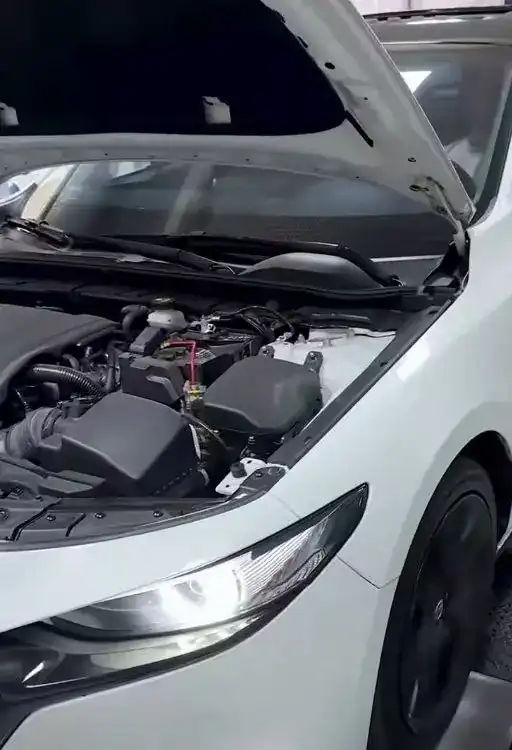
The car was a white 2025 Mazda 3 sedan with Mazda's 2.0-litre SkyActiv-G: a naturally aspirated, direct-injection four-cylinder with 16 valves, chain-driven twin camshafts and Dual S-VT variable timing on both the intake and exhaust side. Power goes to the front wheels through Mazda's own SkyActiv-Drive 6-speed automatic.
Its engine code is PE-VPS. With no turbocharger, there is no boost to raise. On a naturally aspirated SkyActiv-G, every extra newton-metre has to come from how well the engine fills its cylinders and burns the charge at each rpm, and the high compression ratio leaves little room for error on ignition timing.
The car at a glance:
| Specification | Value |
|---|---|
| Vehicle | Mazda 3 2025 sedan, 2.0 SkyActiv-G, front-wheel drive |
| Engine | Mazda SkyActiv-G 2.0 (engine code PE-VPS) |
| Layout | Inline 4-cylinder, DOHC 16-valve, chain-driven camshafts |
| Aspiration and fuel system | Naturally aspirated, gasoline direct injection |
| Valve timing | Dual S-VT, variable intake and exhaust timing |
| Displacement | 1,998 cc |
| Bore × stroke | 83.5 × 91.2 mm |
| Compression ratio | 13.0 : 1 (14.0 : 1 in some markets) |
| Rated power (factory, at the crank) | 114 kW / 155 PS @ 6,000 rpm (122 or 150 PS versions in some markets) |
| Rated torque (factory, at the crank) | 200 Nm @ 4,000 rpm (213 Nm in some markets) |
| Transmission | SkyActiv-Drive 6-speed torque-converter automatic |
| Gear ratios | 3.552 / 2.022 / 1.347 / 1.000 / 0.745 / 0.599 |
| Engine ECU | Mazda Gen 4 SkyActiv-G PCM (2019+), Mitsubishi Electric PYFA or Denso PYFB, MPC5746R microcontroller |
| Read / write | PCMflash module 72 "Mazda Gen 4", via OBD |
| Calibration software | WinOLS |
| Dyno | Dynojet chassis dynamometer, WinPEP 8 |
Factory ratings differ by market; the figures above are for the 155 PS versions. ECU, tool and dyno details are from this job.
Part 2: The baseline pull
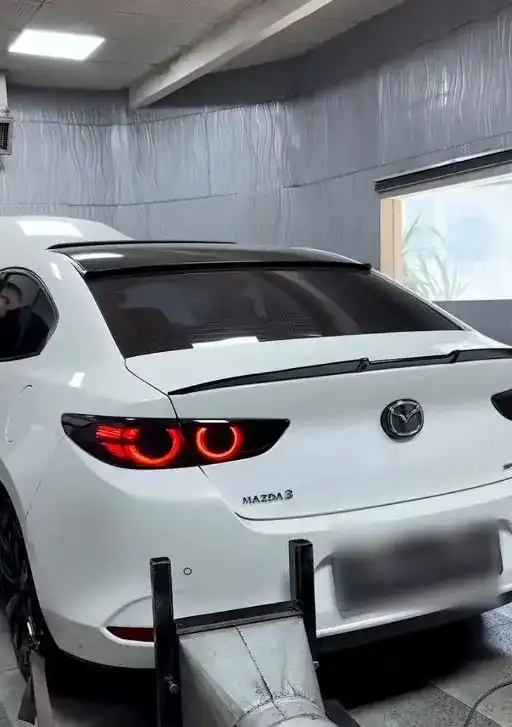
Before touching the PCM, we strapped the Mazda down, set up the exhaust extraction and made the baseline pull. Run 0, the red traces in WinPEP 8, peaked at 127.52 WHP at 5,930 rpm and 163.35 Nm at 4,090 rpm.
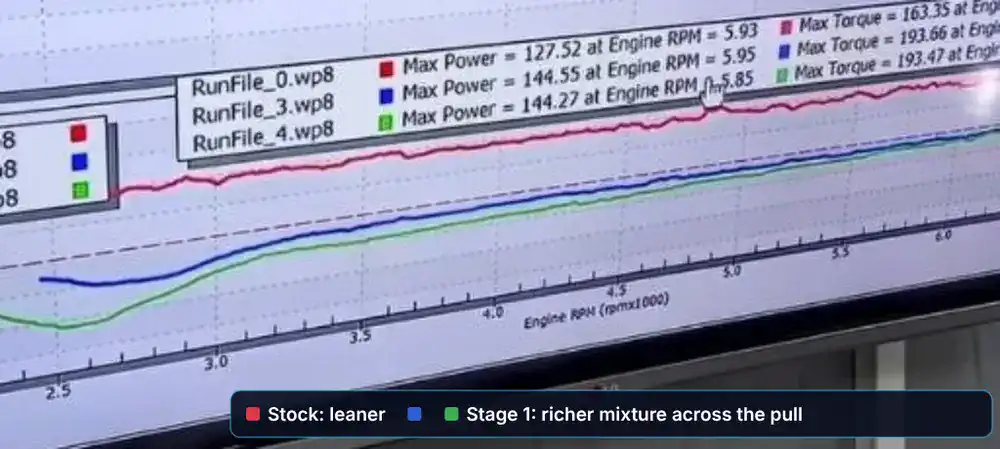
The gap to the 155 PS rating is normal: a chassis dyno measures at the wheels, after the torque converter, the 6-speed gearbox and the driveshafts. What mattered for the calibration was the shape of the stock curve. Stock torque runs almost flat, but it sits below the tuned traces at every point of the pull, from the start of the run to its end. In the lower panel, the stock air-fuel ratio runs leaner than the tuned runs across the pull.
Why the wheel figures sit below the factory rating
Crank vs wheels: 155 PS and 200 Nm are crankshaft ratings, measured on an engine dyno under standard test conditions.
Driveline losses: A chassis dyno measures after the torque converter, the 6-speed automatic, the final drive and the driveshafts, so part of the crank output never reaches the rollers.
Dynojet torque: Dynojet calculates torque from wheel power and engine speed, so its Nm figure includes those losses and cannot be compared with the 200 Nm crank rating.
Test conditions: Air temperature, fuel quality and the dyno's correction factor all move the result. Compare runs made on the same dyno under the same conditions, which is how these runs are meant to be read.
Part 3: Reading the PCM through the OBD port
The 2019-on Mazda 3 uses Mazda's fourth-generation SkyActiv-G engine computer. It comes from Mitsubishi Electric (PYFA) or Denso (PYFB), both built around an MPC5746R microcontroller. We read it through the OBD port with PCMflash, using module 72 "Mazda Gen 4", which supports reading, writing and checksum correction for both the Mitsubishi and the Denso unit on the 1.5, 2.0 and 2.5 SkyActiv-G.
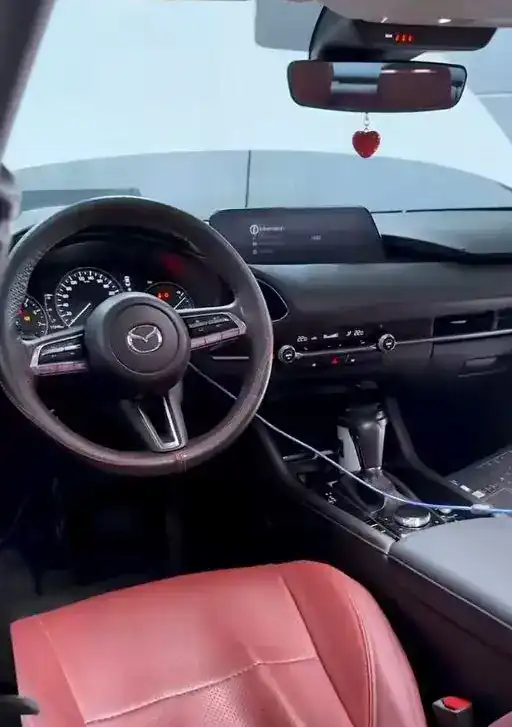
The first job after the read was to archive the original file. The laptop and cable in the photo below are that session, connected to the car's OBD port with the PCM still in place.
Module 72 covers the engine computers. ECUTools' PCMflash list shows no module for the SkyActiv-Drive gearbox controller of the 2019-on cars, and on this project the gearbox software stayed at factory settings.
| Tool | Used for |
|---|---|
| PCMflash, module 72 "Mazda Gen 4" | Reading and writing the SkyActiv-G PCM over OBD, checksum correction |
| J2534 pass-thru interface | Connection between the laptop and the OBD port |
| WinOLS | Building the Stage 1 calibration on the original read |
| Dynojet chassis dyno, WinPEP 8 | Baseline and Stage 1 power, torque and air-fuel ratio |
Part 4: Building the file in WinOLS
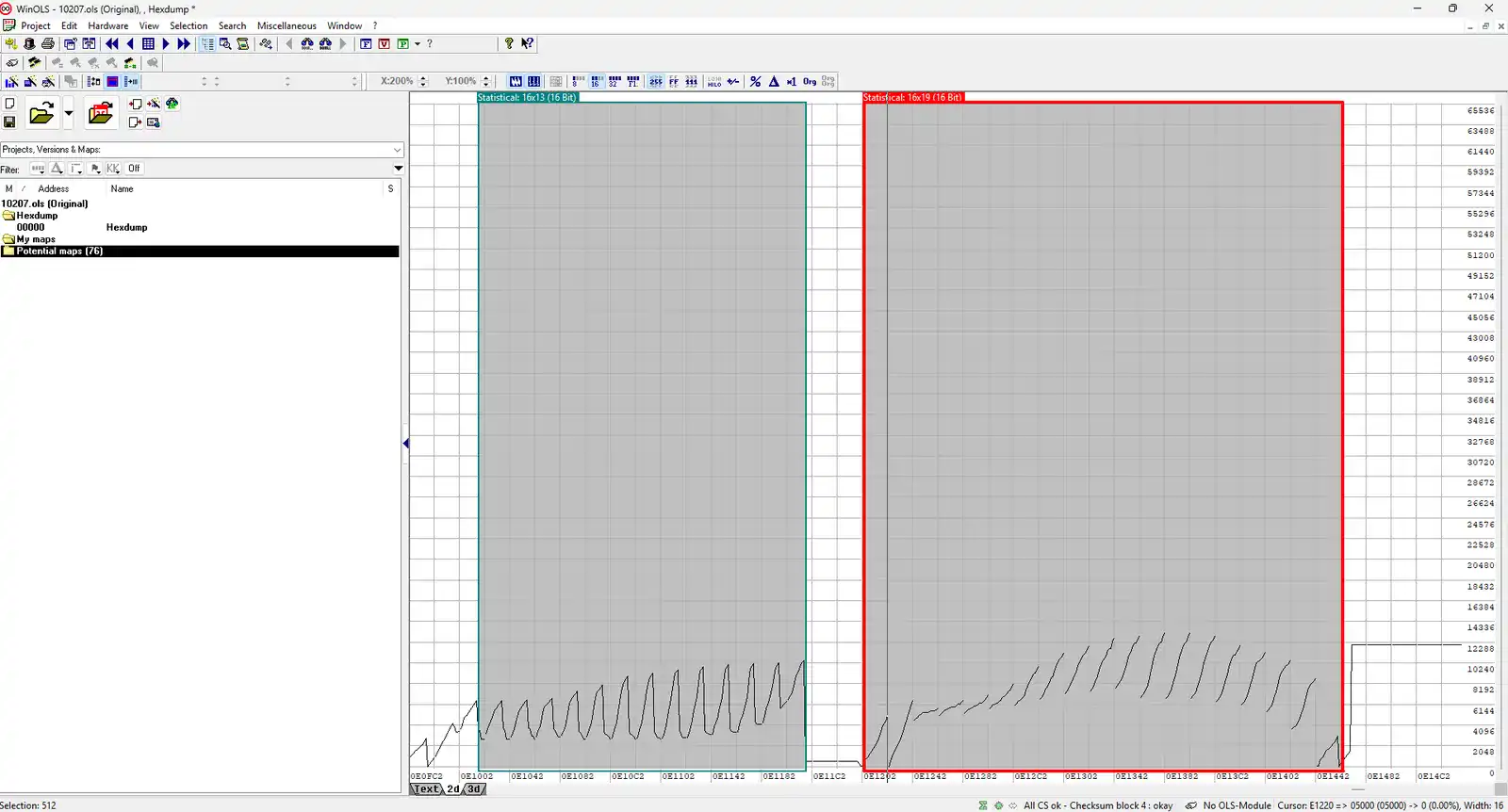
We built the calibration in WinOLS. The screenshot shows the original read (10207.ols, version "Original") in the 2D view, with two 16-bit maps marked, 16 × 13 and 16 × 19, and WinOLS reporting "All CS ok" for the checksums.
Learn this workflow: To build files like this in WinOLS yourself, start with the CaracalTech ECU Remapping Course.
On a naturally aspirated SkyActiv-G there is no boost to raise, so a Stage 1 works on how the engine fills and burns at full load:
Ignition timing: Timing has to stay inside the knock margin of a 13:1 compression engine, on the fuel the car actually runs. Knock control stays fully active.
Full-load fuelling: The air-fuel target at wide-open throttle sets combustion and exhaust temperatures. The lower panel of the dyno graph shows the Stage 1 file running a richer mixture than stock across the pull.
Torque request and throttle: The SkyActiv-G PCM is torque-based. The requested and permitted torque have to agree with the new calibration, or the PCM trims the extra torque back.
Valve timing: Dual S-VT sets intake and exhaust cam timing for each load and rpm point, which decides how well the cylinders fill. Any change here is validated on the dyno, pull by pull.
With the file finished, we wrote it back over OBD with PCMflash, which corrects the checksums on write.
Part 5: Back on the Dynojet
Same car, same Dynojet, Stage 1 file loaded. Run 3 peaked at 144.55 WHP at 5,950 rpm and 193.66 Nm at 3,980 rpm: +17.03 WHP and +30.31 Nm over the stock run. The torque gain is not a spike at one rpm: the tuned torque curve sits above stock across the whole pull, and peak torque now arrives slightly earlier, at 3,980 rpm instead of 4,090 rpm.
Then we ran it again. Run 4 made 144.27 WHP and 193.47 Nm, within 0.28 WHP and 0.19 Nm of Run 3. Two pulls this close show that the gain comes from the calibration and holds from run to run.
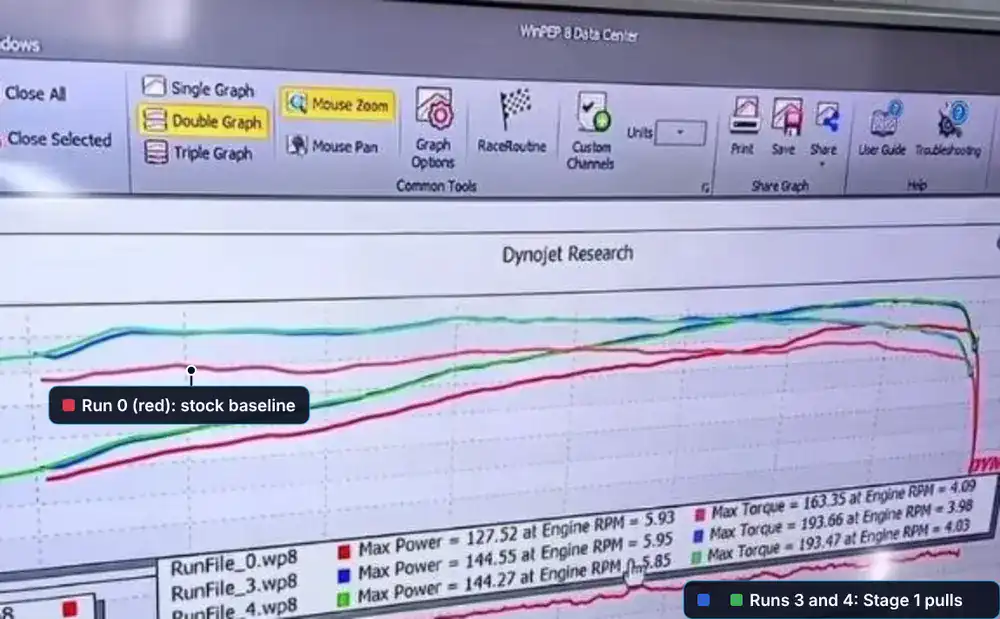
| Measurement | Stock (Run 0) | Stage 1 (Run 3) | Stage 1 repeat (Run 4) | Change (Run 3 vs Run 0) |
|---|---|---|---|---|
| Peak power | 127.52 WHP @ 5,930 rpm | 144.55 WHP @ 5,950 rpm | 144.27 WHP @ 5,850 rpm | +17.03 WHP (+13.4%) |
| Peak torque | 163.35 Nm @ 4,090 rpm | 193.66 Nm @ 3,980 rpm | 193.47 Nm @ 4,030 rpm | +30.31 Nm (+18.6%) |
| Air-fuel ratio (lower panel) | Leaner across the pull | Richer across the pull | Richer across the pull |
Values as read from the WinPEP 8 legend. Dynojet chassis dynamometer, figures at the wheels.
Stage 1 gain: +17.03 WHP and +30.31 Nm at the wheels, a 13.4% power increase, confirmed by a repeat pull.
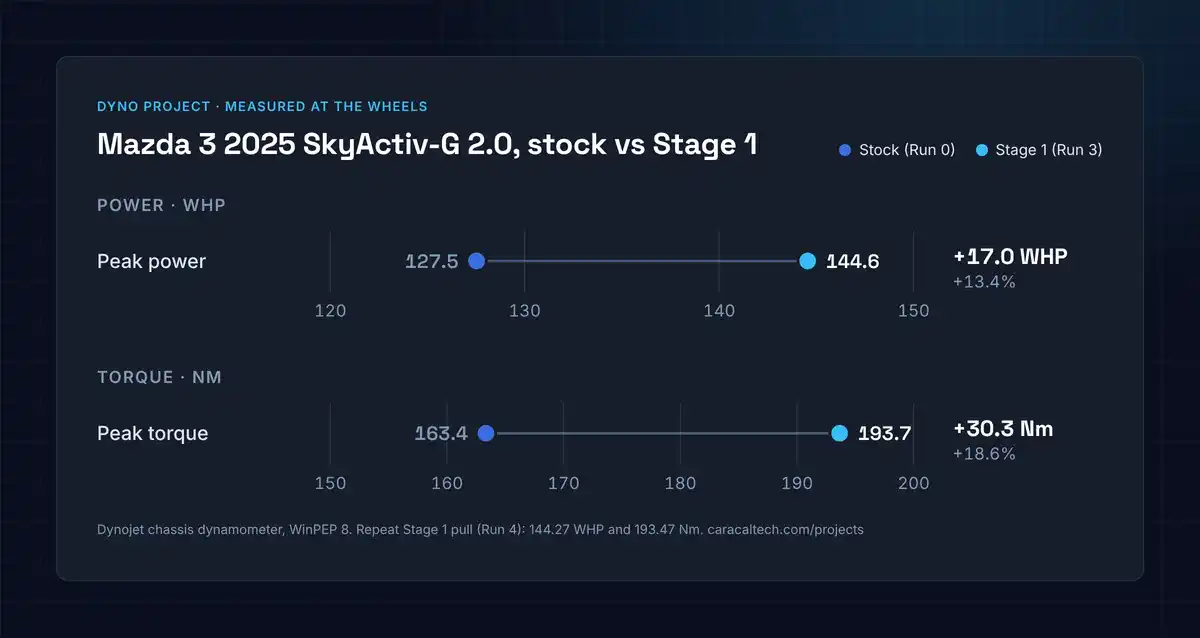
A gain of this size is large for a naturally aspirated engine. It depends on the margins in the stock calibration, the fuel and the conditions on the day, so another Mazda 3 on different fuel or a different software version can land elsewhere.
Part 6: What it means behind the wheel
With torque up across the whole rev range, the 6-speed automatic has more to work with in every gear. The car pulls harder at the same pedal position, and a kickdown for an overtake lands on a stronger part of the curve.
Because the gain is spread across the pull rather than concentrated at the top, it shows up in everyday driving, not only at the redline.
Checks for a SkyActiv-G Mazda 3
- Identify the PCM first. 2019-on cars use the Gen 4 PCM (Mitsubishi PYFA or Denso PYFB), covered by PCMflash module 72. Earlier SkyActiv-G cars use the Gen 3 PCM, covered by module 10.
- Software version. A file has to be built on the car's own read. Never write a file copied from another vehicle.
- Fuel. At 13:1 compression the SkyActiv-G is sensitive to fuel quality. On poor fuel, knock control pulls timing and the gain shrinks with it.
- Heat. A naturally aspirated engine loses power as intake air temperature rises. Allow cool-down between dyno pulls and compare runs made under the same conditions.
- Mechanical health. A remap does not fix existing faults. Clear stored fault codes and check spark plugs, coils and the intake for leaks before tuning.
- Direct-injection deposits. Like other GDI engines, the SkyActiv-G can build carbon on the intake valves over time, which costs power whatever the calibration.
- Legal and warranty. ECU modifications can affect the manufacturer's warranty and may not be permitted for road use in every jurisdiction. Check local rules before tuning.
FAQ
Which engine is in the 2025 Mazda 3 2.0?
The SkyActiv-G 2.0, engine code PE-VPS: a 1,998 cc naturally aspirated, direct-injection four-cylinder with Dual S-VT. In its 155 PS form it is rated at 114 kW at 6,000 rpm and 200 Nm at 4,000 rpm.
Can a naturally aspirated SkyActiv-G be remapped?
Yes. On this car, Stage 1 added 17.03 WHP and 30.31 Nm at the wheels on a Dynojet, confirmed by a repeat pull. Gains depend on the stock calibration, the fuel and the car's condition.
Which tool reads the 2019-on Mazda 3 PCM?
We used PCMflash module 72 "Mazda Gen 4" over OBD. It supports reading, writing and checksum correction for both the Mitsubishi (PYFA) and the Denso (PYFB) SkyActiv-G PCM.
Why are there two Stage 1 runs?
Run 3 and Run 4 are two pulls with the same Stage 1 file. They landed within 0.3 WHP and 0.2 Nm of each other, which shows the result is repeatable.
Was the 6-speed gearbox tuned?
No. This project covered the engine PCM only. ECUTools' PCMflash list shows no module for the SkyActiv-Drive gearbox controller of the 2019-on cars.
Why does the dyno show about 128 WHP when the brochure says 155 PS?
The brochure figure is measured at the crankshaft. The dyno measures at the wheels, after the torque converter, gearbox and driveshafts. Part 2 explains the difference.
Sources
- Wikipedia: Skyactiv: SkyActiv-G 2.0 engine code PE-VPS, 1,998 cc, naturally aspirated
- Mazda3 owner's manual: engine specifications: DOHC 16-valve, bore and stroke 83.5 × 91.2 mm
- AustralianCar.Reviews: PE-VPS engine: Dual S-VT and direct injection
- Schaeffler catalogue: Mazda 3 (BP) 2.0 SkyActiv-G: 114 kW / 155 HP, engine codes PE-VPS
- ZigWheels: Mazda 3 SkyActiv-G 2.0 specifications: 200 Nm at 4,000 rpm, 13.0:1 compression, 6-speed automatic
- Mazda New Zealand: Mazda3 brochure: 6-speed automatic gear ratios
- AutoDeal: Mazda 3 2.0 SkyActiv 2025: SkyActiv-Drive 6-speed automatic, 1,998 cc, 16 valves
- ECUTools: PCMflash module 72 "Mazda Gen 4": SkyActiv-G 2019+ Mitsubishi PYFA and Denso PYFB, read, write and checksum
- ECUTools: PCMflash module 10 "Mazda Gen 3": earlier SkyActiv-G PCMs
- ECUTools: CMDFLASH update: Mazda SkyActiv-G PYFA (Melco) and PYFB (Denso) on MPC5746R
More dyno projects
Tuning a 2019-on Mazda 3 with the SkyActiv-G?
Send the original read from your PCM through File Service, or ask the calibration team about your car on WhatsApp +36 70 604 8339.
Want to build files like this yourself?
Learn ECU remapping in WinOLS with the CaracalTech ECU Remapping Course.
Author: CaracalTech Calibration Team
Last Updated: November 2026
Enjoyed the content? Add us as a preferred source to see more of it in Search.