
What Is Launch Control? How It Works and How to Add It
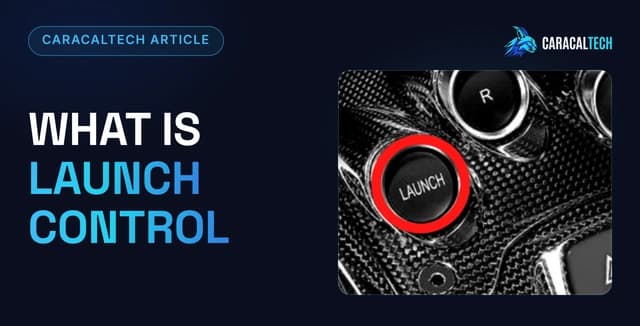
Short answer: Launch control is an electronic function that holds the engine at a set speed while the car is stationary, then manages clutch release, torque and wheelspin for the fastest possible start. Owners add it to get repeatable drag-strip and track launches; it is available as a software option for many VAG, BMW and Fiat ECUs and for VAG DSG gearbox units. Our solution file covers 184 ECUs and gearbox units across 14 brands, from $75 per file.
What is launch control in a car?
Launch control is a driver aid for standing starts. When it is active, the system holds the engine at a set launch speed while you keep the brake pressed and the throttle down, so power builds before the car moves. When you release the brake, the clutch engages in a controlled way and the ECU, together with traction control, limits torque so the tyres grip instead of spinning. Many sports cars have it from the factory; on others it can be added with an ECU file, and on dual-clutch gearboxes with a TCU file as well. It is meant for the track and drag strip, and it increases wear on the clutch, gearbox and driveshafts.
| Question | Answer | Source |
|---|---|---|
| What does it do? | Holds engine speed at a set number at a standstill, then manages the launch | Wikipedia: Launch control (automotive) |
| When did it appear? | Made possible by 1980s electronics; banned in F1 for 1994, allowed again from the 2001 Spanish Grand Prix | Wikipedia: Launch control (automotive) |
| Typical launch speed | About 2,700 rpm (BMW M3/M4 M Steptronic), 4,000 rpm (Nissan GT-R R Mode Start), about 6,500 rpm (Porsche 911 PDK) | BMW M, Guide Auto Web, Porsche 911 manual |
| Conditions | Warm engine; stability control in sport mode or off | Audi RS3 manual |
| Downside | Premature wear of clutch, gearbox and driveline parts | BMW M4 owner's manual |
| Can it be added? | Yes, on supported ECUs and TCUs: 184 units, 14 brands, from $75 per file | CaracalTech launch control solution |
🚩In This Article, You Will Find Out:
- What is launch control?
- How does the launch control system work?
- How to do the launch control Remap/ launch control module?
- In what types of vehicles can you do launch control remap/ launch control module?
- Factory launch control examples
- The advantages and disadvantages of launch control remap
- Launch control remap applications
- Launch control remap training in ECU
- Frequently asked questions about launch control
What is “Launch Control”?
You have probably seen the noise and tyre smoke at the start line of drag races and other standing-start races, and maybe you have been to such races as a driver or passenger. What makes such smoke and noise, and how do cars launch so hard? That is the question we are going to answer in this article.
Launch control, like many other technologies in the automotive world, owes its creation to the wider use of electronic components: developments in electronics in the 1980s made it possible. In Formula 1, launch control and other driver aids were banned for the 1994 season and allowed again from the 2001 Spanish Grand Prix. Like other automotive technologies, launch control was first used on racing cars, where the aim was to reduce wheelspin and drivetrain losses at the start and to reach the highest possible initial acceleration, because races are won by fractions of a second.
The launch control system had allowed the driver to get the highest efficiency from the engine, wheels, and gearbox at the beginning of the start with minimum initial movement loss.

How Does The “Launch Control” System Work?
The excellent performance of this system in racing cars increased the use of this technology in regular vehicles.
A launch control system's optimal functioning needs a good electronic and mechanical coupling with other vehicle components, such as throttle valve, gearbox, brake, and track control.
The logic of this system is that wheel slip is kept low at the start, and once the vehicle is moving, engine speed and torque do not drop. This needs a balance: if the clutch is released at too high an engine speed, the force at the wheels exceeds the available grip and the wheels spin; if it is released at too low an engine speed, the engine bogs down and acceleration is lost.
In vehicles without a launch control system, the driver has to rely on skill: holding the engine at a suitable speed, then releasing the clutch and feeding in the throttle based on the sound of the engine and experience with the car, to keep wheelspin low and acceleration high. The right launch speed depends on the engine and gearbox; factory systems use quite different values, for example about 2,700 rpm on the BMW M3/M4 with M Steptronic, 4,000 rpm with the Nissan GT-R R Mode Start and about 6,500 rpm on a Porsche 911 with PDK.
This logic has been used to develop the launch control system. As we mentioned above, a good launch control system requires the concomitant, concordant functioning of different systems and components of the vehicle. For this purpose, once the driver activates the launch control system, he should accelerate to reach the RPM limit set by the manufacturer. Once at the designated RPM, the launch control system locks RPM at that set value. In this situation, even further pushing the accelerator does not increase the RPM.
Now it is the transmission's turn. The launch control system releases the clutch (or, in an automatic, the brake) so that the torque built up in the previous step reaches the wheels. If the torque at the wheels exceeds the available grip, the wheels spin. Working together with traction control through the ECU, the system limits engine torque to keep slip low. This is why a launch control system is more consistent than a manual launch by the driver.

🚨Some Essential Tips To Remember:
- If your vehicle has launch control system, you can learn how to activate it from the relevant user manual of the car provided by the manufacturer.
- Launch only with the engine and gearbox at full operating temperature. BMW and Audi owner's manuals, for example, require a warm engine before launch control can be used.
- On automatic and dual-clutch gearboxes, factory launch control is used in D, S or M with the brake held, never by revving the engine in N and then selecting a gear. Owner's manuals warn against shifting from N or P into D or R above idle speed, because it can damage the transmission.
- Do not hold the car at the launch speed longer than needed. Systems protect the clutch from overheating, and after repeated launches the function can be unavailable for several minutes (Audi RS3 manual).
- On turbocharged engines, holding a higher engine speed before the launch lets boost build before the car moves, so the launch is stronger and smoother.
- On cars with a DSG or other dual-clutch gearbox, the launch function is controlled by the gearbox control unit (TCU) as well as the engine ECU, so adding launch control usually needs a TCU file too. Every launch also increases wear on the clutch, gearbox and driveshafts.
How To Do The “Launch Control” Remap?
As you probably know, this system is mostly used in dual-clutch gearboxes, but it can also be viewed or even launched in manual transmission systems.
Based on your vehicle's model and its specifications, such as gearbox type, torque tables, and so forth, a number is calculated for your engine's RPM launch limit. Then, using relevant tools and applications, this number is defined for your car's ECU to allow it to be launched the right way.
In What Types of Vehicles Can You Do The “Launch Control Remap/ Launch Control Module”?
Today, many cars leave the factory with a launch control system, from BMW M models and the Porsche 911 and Panamera with PDK to the Mitsubishi Lancer Evolution X with Twin Clutch SST (S-Sport mode), Audi RS models with S tronic, Volkswagen models with DSG transmission such as the Golf R, and Bugatti.
If your manual or dual-clutch car does not have this system, it can often be added by remapping. Our launch control file covers 184 ECUs and gearbox control units across 14 brands: Volkswagen 40, Audi 38, Seat 33, Skoda 33, Fiat 14, BMW 12, Suzuki 3, Ford, Opel, Porsche and Renault 2 each, and Kia, Lamborghini and Lancia 1 each (by maker: Bosch 121, Marelli 20, Siemens 8, others 35). Examples are Bosch EDC17C50 and EDC16C35 (BMW diesel), Bosch MED17.5 and MED9.1 (VAG petrol), Marelli MJ8F3 (Fiat) and Temic DQ250 and DQ381 DSG gearbox units. Not every model or ECU of these brands is supported; to check yours, search the list or contact us by email.
Factory launch control examples
The table shows how carmakers set up their own launch control systems. It helps to understand what a launch control remap copies: a set launch speed, conditions for activation and protection for the drivetrain.
| Car | System and gearbox | Manufacturer conditions and notes | Source |
|---|---|---|---|
| BMW M4 Coupe (F82) | Launch Control, M DCT dual-clutch | Engine warm after at least 10 km of driving; DSC switched off; causes premature component wear | BMW M4 owner's manual |
| BMW M3/M4 (G80/G82) | M Launch Control, 8-speed M Steptronic automatic | Launch speed about 2,700 rpm; cool-down time needed between two launches; no lifetime limit on use | BMW M |
| Audi RS3 (2014) | Launch control programme, S tronic dual-clutch | Engine warm, ESC in sport mode; heavy load on all parts; may be unavailable for several minutes after use | Audi RS3 instruction manual |
| Porsche 911 with PDK | Launch Control with Sport Chrono, PDK dual-clutch | Sport Plus mode, D or M selected; engine speed rises to about 6,500 rpm | Porsche 911 owner's manual |
| Nissan GT-R (2012) | R Mode Start, dual-clutch | Raises revs to 4,000 rpm; allows four successive launches before the system is disabled | Guide Auto Web |
| Mitsubishi Lancer Evolution X (from 2008) | Launch control in S-Sport mode, Twin Clutch SST | Twin Clutch SST first used in the 2008 Lancer Evolution X; launch control only in S-Sport mode | Wikipedia: Twin Clutch SST |
CaracalTech can solve the software side when a car has no launch control from the factory, or when its launch settings need to change. Our launch control file currently supports 40 Volkswagen, 38 Audi, 33 Seat, 33 Skoda, 14 Fiat and 12 BMW ECUs and gearbox units, among 184 units across 14 brands. For dual-clutch cars, the DSG gearbox units Temic DQ200, DQ250, DQ381 and DQ500 are on the list.
The Pros and Cons of “Launch Control System”:
The main advantages of launch control are fast, repeatable starts with less wheelspin, because the system manages engine speed, torque and clutch release more consistently than most drivers can. The main disadvantage is wear: BMW states that using launch control causes premature component wear, and Audi warns that it places a heavy load on all parts of the vehicle. Repeated launches heat the clutch and gearbox, and some systems switch off for a while to protect them. Nissan, for example, did not cover GT-R transmission damage proven to result from launch control with VDC switched off. In short, launch control gives you the most of your engine's power from a standstill, but it is best kept for occasional use on the track or drag strip.

"Launch Control" Remap Software:
At CaracalTech, with years of experience in calibration and ECU remapping, we identify and edit the launch control tables in the ECUs and gearbox units listed on our launch control solution page, using our own methods for setting the launch rpm and its conditions. Our ECU tuning courses teach how to find and edit tables in ECM Titanium and WinOLS; ask us which course covers the ECU you work on.
Launch control cost by remap
The launch control price depends on the ECU and gearbox. A launch control file starts from $75 (1 credit) per file on our launch control remap solution file page; cars with a dual-clutch gearbox may also need a TCU file. You can also learn to add launch control yourself in diesel and petrol ECUs; the options are below.
1- If you want to learn how to add launch control in diesel and petrol engines with WinOLS, you can enter our ECU tuning course.
2- If you need only Launch control remap file, upload original ECU file in Tuning File Service, after short time our experts send you remapped file.
3- If you already use remapping software like WinOLS, our WinOLS mappacks help you find the right maps faster and more accurately.
Frequently asked questions about launch control
What does launch control do in a car?
It holds the engine at a set speed while the car is stopped and the brake is pressed, then controls clutch release and engine torque when you let go of the brake. The aim is the fastest start with little wheelspin. Factory examples use about 2,700 rpm (BMW M3/M4 M Steptronic) up to about 6,500 rpm (Porsche 911 PDK).
How does launch control work?
The ECU acts as a second rev limiter that caps engine speed at the launch value. When the brake is released, the gearbox engages the clutch in a controlled way and the ECU, together with traction control, cuts torque if the wheels start to spin. On dual-clutch gearboxes, the TCU and ECU work together, which is why some cars need two files.
Can you add launch control to any car?
Not to every car. It can be added when the ECU (and, on dual-clutch cars, the TCU) is supported. Our launch control file covers 184 ECUs and gearbox units across 14 brands, such as Bosch EDC17C50 for BMW, Bosch MED17.5 for VAG petrol engines, Marelli MJ8F3 for Fiat and Temic DQ250 DSG units. Search the list for your ECU first.
When was launch control invented?
No single invention date is documented. Developments in electronics in the 1980s made launch control possible, and it was first used in racing. Formula 1 banned launch control and other driver aids for the 1994 season and allowed them again from the 2001 Spanish Grand Prix. On road cars it was offered, for example, on the BMW M3 with SMG II in 2002.
Is launch control bad for your car?
Used occasionally on a warm car, it is designed to work, but it adds wear. BMW states that launch control causes premature component wear, and Audi says it places a heavy load on all parts of the vehicle. Systems limit repeated use to protect the clutch and gearbox; the 2012 Nissan GT-R allows four launches before the function is disabled.
Which cars have launch control from the factory?
Many performance cars, including BMW M models, Porsche 911 and Panamera with PDK and Sport Chrono, Audi RS models with S tronic, the Nissan GT-R and the Mitsubishi Lancer Evolution X with Twin Clutch SST. Check your owner's manual for how it is activated on your car.
How much does a launch control remap cost?
At CaracalTech, a launch control file starts from $75 (1 credit) per file. The final price depends on the ECU, and dual-clutch cars may also need a gearbox (TCU) file. Upload your original ECU file through our tuning file service and our team returns the modified file.
References
- Wikipedia: Launch control (automotive) – Supports: definition, held engine speed, 1980s electronics, F1 ban for 1994 and return in 2001.
- BMW M4 Coupe owner's manual – Supports: warm engine, DSC off, premature component wear.
- BMW M: M Launch Control with Steptronic – Supports: launch speed, cool-down time, no lifetime limit.
- Audi RS3 instruction manual (2014) – Supports: warm engine, ESC sport, heavy load and wear, temporary lock-out.
- Porsche 911 owner's manual – Supports: Sport Plus, D or M, about 6,500 rpm.
- Guide Auto Web: 2012 Nissan GT-R R Mode Start – Supports: 4,000 rpm, four launches.
- Wikipedia: Twin Clutch SST – Supports: Lancer Evolution X 2008, S-Sport mode.
- Carsales: BMW M3 SMG review (2002) – Supports: launch control on the M3 with SMG II.
- Kia owner's manual: automatic transmission – Supports: do not shift from N or P into D or R above idle speed.
Usage note: launch control is intended for motorsport and track use only. Public-road speed limits always apply.
📍For more information and probable problems feel free to contact us: [email protected]
Enjoyed the content? Add us as a preferred source to see more of it in Search.