
Mercedes S350 W221 M272 Remap: +19 WHP, +28 Nm

Mercedes S350 W221 M272 Remap: +19 WHP, +28 Nm on the Dynojet
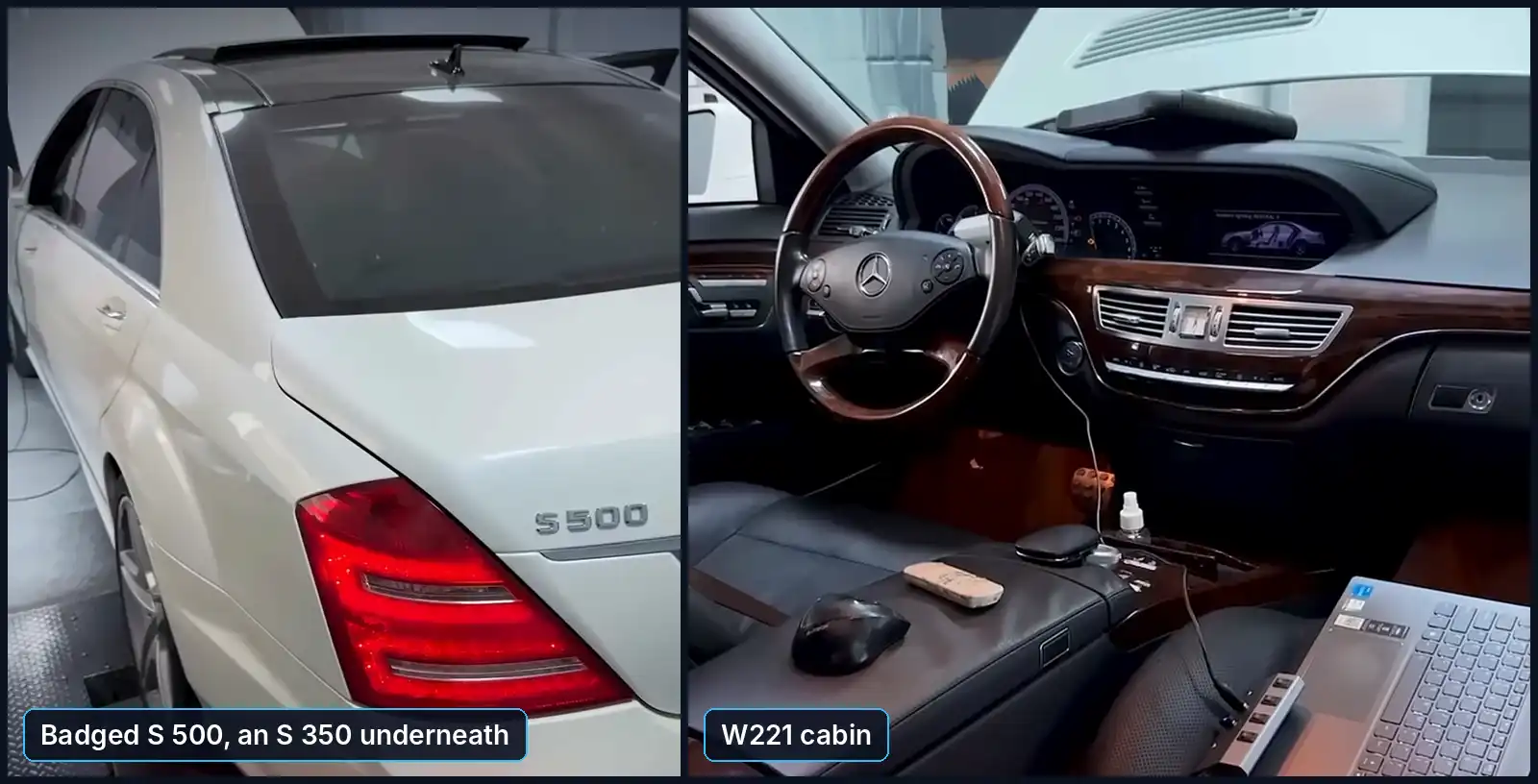
A white Mercedes-Benz S-Class (W221) came in wearing S 500 and AMG badges on the boot lid. Under the bonnet was the M272 3.5-litre naturally aspirated V6 of an S 350. We measured it stock on our Dynojet, read and wrote its Bosch ME9.7 engine ECU with PCMflash, and after the calibration it went from 201.91 to 220.80 WHP and from 267.07 to 295.03 Nm, all measured at the wheels. Most S350 remap pages cover the diesel S350 CDI or S350d; this one is the petrol M272 V6.
Fast View
- Car: Mercedes-Benz S 350 (W221), badged S 500, with the 7G-Tronic automatic and rear-wheel drive.
- Engine: M272 KE35 (M 272.965), 3,498 cc 90° V6, naturally aspirated, rated 200 kW / 272 PS and 350 Nm.
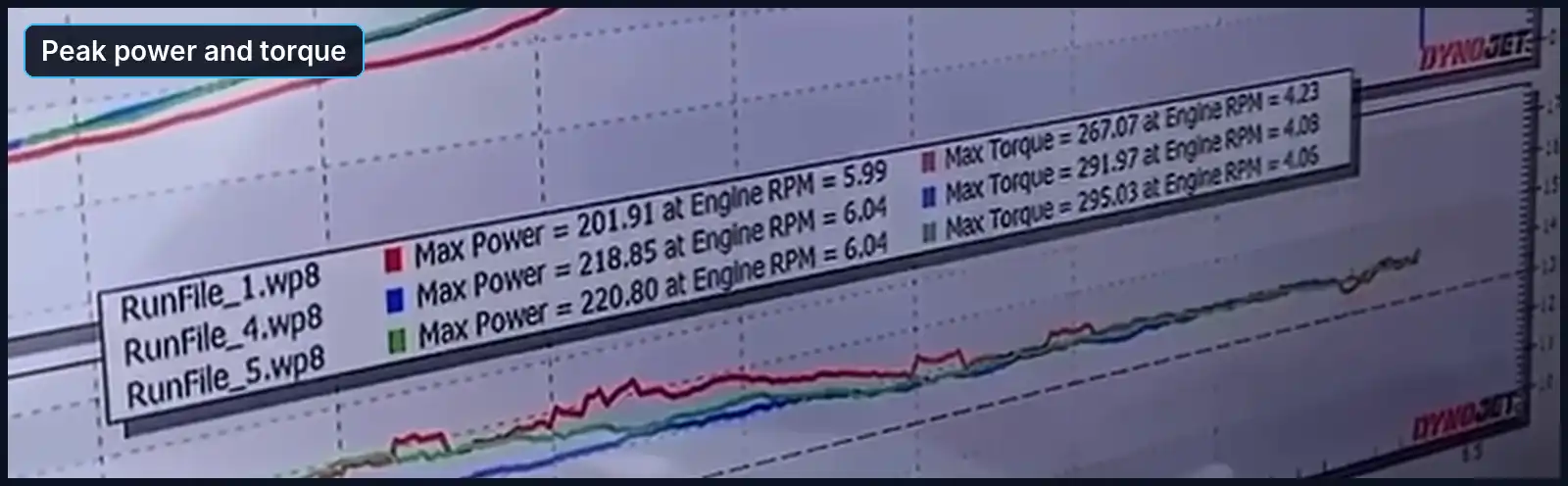
- Stock baseline (Run 1) on the Dynojet: 201.91 WHP at 5,990 rpm and 267.07 Nm at 4,230 rpm.
- After the calibration (Run 5): 220.80 WHP at 6,040 rpm and 295.03 Nm at 4,060 rpm, a gain of +18.89 WHP (+9.4%) and +27.96 Nm (+10.5%).
- Engine ECU: Bosch ME9.7, read and written with PCMflash (module 69), whose module list covers the M272 (ME9.7) for read, write and checksum correction.
Part 1: An S 500 that is really an S 350
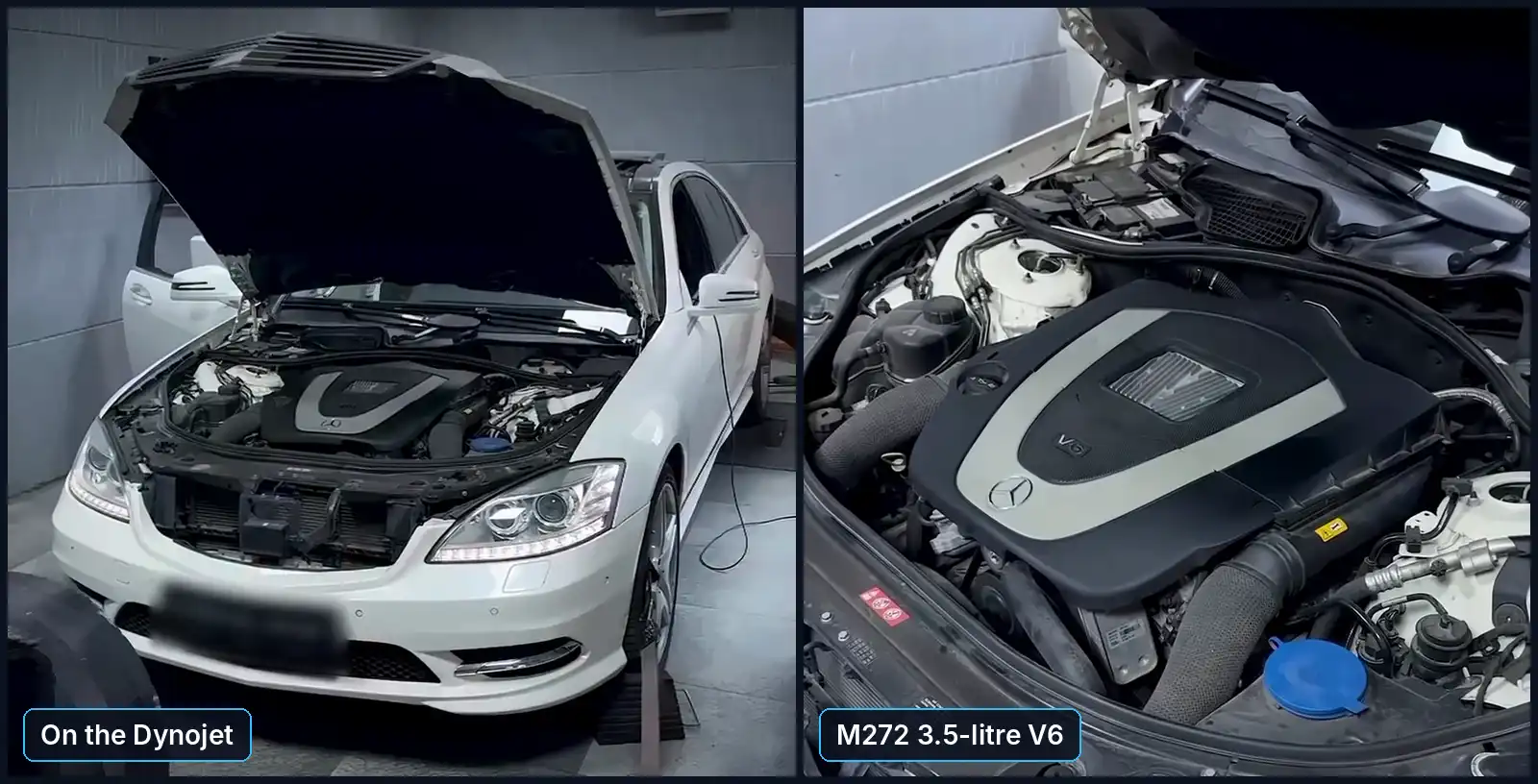
The badges say S 500, and the boot lid carries an AMG badge as well. The engine bay tells a different story: the cover is marked V6, and the engine is Mercedes' M272, the 3.5-litre V6 that powers the W221 S 350. An S 500 of this generation has a V8. Badge swaps like this are common on used S-Classes, so the first step on any job like this is to identify the engine and the ECU from the car itself, not from the boot lid. A calibration has to be built for the engine and the software that are actually fitted.
The M272 is a 90° V6 with an aluminium block, four camshafts and 24 valves, and a balance shaft between the cylinder banks. Both the intake and the exhaust camshafts have continuous variable timing, and the intake is a two-stage variable-length manifold with tumble flaps. Fuel is delivered by port injection. Because the engine is naturally aspirated, a remap cannot add boost: the gain comes from ignition timing, fuelling, the torque model and the limits around them, so the result is smaller than on a turbo engine.
The car at a glance:
| Specification | Value |
|---|---|
| Vehicle | Mercedes-Benz S 350 saloon (W221), badged S 500, rear-wheel drive |
| Engine | Mercedes-Benz M272 KE35, engine code M 272.965 |
| Layout | 90° V6, DOHC per bank, 24 valves, balance shaft, light-alloy block |
| Displacement | 3,498 cc |
| Bore × stroke | 92.9 × 86.0 mm |
| Compression ratio | 10.7 : 1 |
| Fuel system | Multi-point port injection |
| Aspiration | Naturally aspirated, two-stage variable intake manifold with tumble flaps |
| Valve timing | Continuously variable on intake and exhaust camshafts |
| Rated power (factory, at the crank) | 200 kW / 272 PS @ 6,000 rpm |
| Rated torque (factory, at the crank) | 350 Nm @ 2,400 to 5,000 rpm |
| Transmission | 7G-Tronic 7-speed torque-converter automatic (722.9) |
| Factory performance | 0 to 100 km/h in 7.3 s, 250 km/h (limited) |
| Fuel requirement (fuel door label) | RON 95, minimum RON 91 |
| Engine ECU | Bosch ME9.7, MPC563 microcontroller |
| Read / write | PCMflash, module 69 (Mercedes-Benz) |
| Dyno | Dynojet chassis dynamometer, WinPEP 8, JIS correction |
Factory figures are Mercedes-Benz data as published in the sources below. ECU, tool, fuel label and dyno details are from this job.
Part 2: The fuel door and the baseline pull
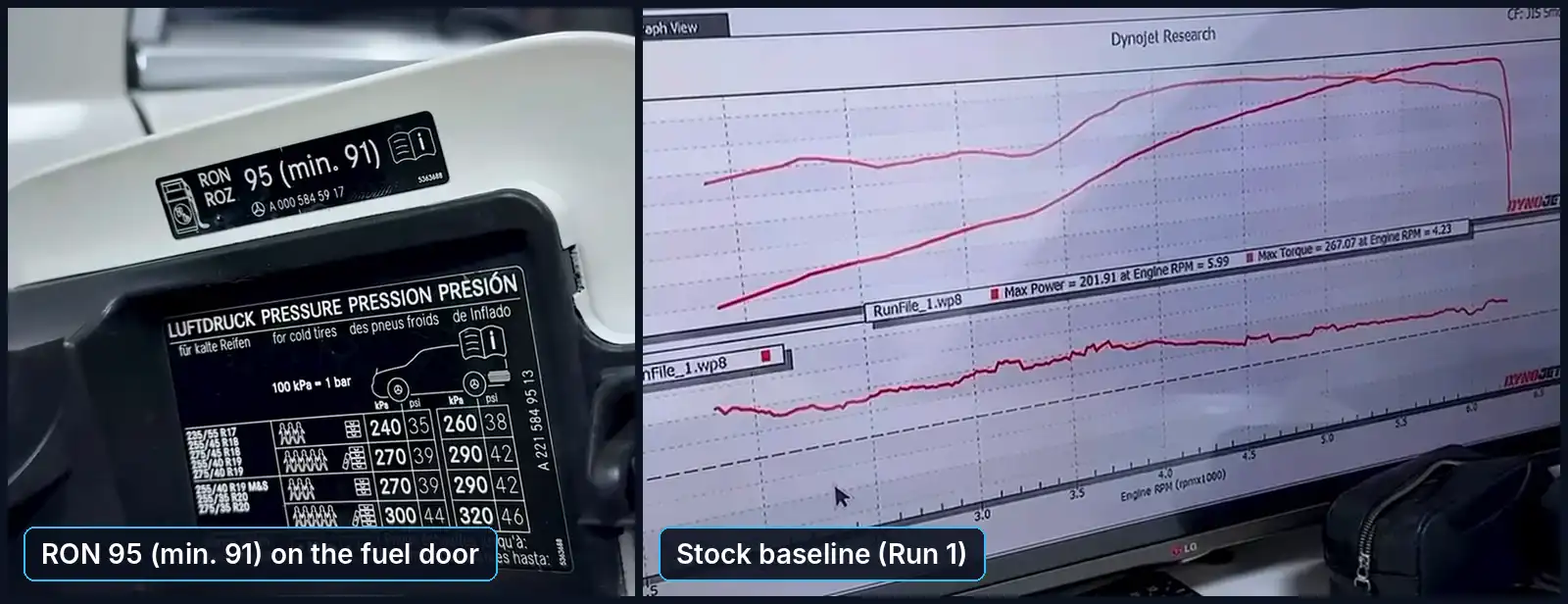
The label inside the fuel door states what the engine was calibrated for: RON 95, minimum RON 91. The fuel in this car's tank was of lower quality than that label calls for. Every pull in this project, stock and tuned, was made on the same fuel, and the calibration was built for the fuel the car actually runs. The owner's priority was not peak power: he wanted an engine that runs cleanly and safely at full throttle on that fuel. Our article on ECU remapping for low-octane fuel explains how a file is adapted to the fuel a car really uses.
Before touching the ECU, we made the baseline pull on the Dynojet. Run 1, the red traces in WinPEP 8, peaked at 201.91 WHP at 5,990 rpm and 267.07 Nm at 4,230 rpm. If WinPEP overlays are new to you, our guide on how to read a dyno graph explains the traces and the legend.
Part 3: Why the wheel figures sit well below 272 PS
The stock run reached about 75% of the factory rating at the wheels: 201.91 WHP against 272 PS (268 hp) at the crank, and 267.07 Nm against 350 Nm. Two things make up that gap.
Driveline losses. Mercedes rates the engine at the crankshaft. A chassis dyno measures at the rear wheels, after the torque converter, the 7G-Tronic gearbox, the propshaft, the differential and the driveshafts, so part of the crank output never reaches the rollers. Dynojet also calculates torque from wheel power and engine speed, so its Nm figure includes those losses and cannot be compared directly with the 350 Nm rating.
Mileage. This car has covered a high mileage. Based on the CaracalTech team's experience with high-mileage engines on the dyno, part of the gap between what Mercedes-Benz published and what WinPEP shows at the wheels comes from that mileage: an engine with many years of wear does not make the power it made when new. Putting an exact number on it would need a mechanical check such as a compression or leak-down test, which was not part of this job.
How to read these numbers
Same car, same day: All five runs were made on the same Dynojet with the same fuel, so the change between them is the meaningful figure, not the comparison with the factory rating.
Correction: WinPEP 8 applied the JIS correction factor to every run, so the runs are corrected to the same standard conditions.
Dynojet torque: Torque is calculated from wheel power and engine speed, so it is a wheel figure, not a crank figure.
Part 4: The Bosch ME9.7 and the PCMflash read
The M272 in the W221 is managed by a Bosch ME9.7 engine ECU. The same ECU family controls the M272 V6 and M273 V8 petrol engines across Mercedes-Benz models of this period. Autotuner's compatibility list gives its microcontroller as an MPC563.
We read and wrote the ECU with PCMflash. Its Mercedes-Benz module, module 69, lists M156/M272/M273 (ME9.7) with read, write and checksum correction. The first job after the read was to archive the original file. Autotuner also lists the Bosch ME9.7 for OBD read and write, with the Mercedes 350 3.5 V6 272 hp among the vehicles concerned. For a wider view of the hardware, see our comparison of the best ECU tuning tools and programmers.
| Item | Detail |
|---|---|
| ECU | Bosch ME9.7 (engine) |
| Microcontroller | MPC563 |
| Engine applications | Mercedes-Benz M272 V6 and M273 V8 petrol engines |
| Tool used on this car | PCMflash, module 69 |
| PCMflash support | Read, write and checksum correction for M156/M272/M273 (ME9.7) |
| Other tools that list this ECU | Autotuner (OBD read and write, Mercedes 350 3.5 V6 272 hp listed) |
| Gearbox controller | Separate 7G-Tronic TCU; Autotuner lists the VGS-NAG2 family for OBD read and write |
Confirm the ECU hardware and software number on the car before reading. Badges and model names are not proof of what is fitted, as this car shows.
Part 5: What the calibration works on
The ME9.7 is a torque-based ECU: the pedal position becomes a torque request, and the ECU turns that request into throttle opening, ignition timing and fuel. Our article on the torque-based ECU structure explains this chain, and the first step in it is the driver wish map.
Ignition timing: On a naturally aspirated engine, timing is where most of the gain is found, and it is also where fuel quality sets the limit. The timing has to suit the fuel in the tank so knock control does not keep pulling it back. Our guide to spark advance and timing maps covers how timing is read and logged.
Fuelling: The full-load mixture was set for this engine on this fuel, so the engine runs cleanly at full throttle. The basics of petrol calibration are covered in our petrol tuning fundamentals.
Torque model and limits: The ECU's torque model and limits have to agree with what the engine now makes, or the ECU trims the extra torque back. On a car with a torque-converter automatic, the torque the gearbox receives also matters.
We wrote the file back with PCMflash, with the checksum corrected, and the car went back on the rollers.
Learn this workflow: To build files like this yourself, start with the CaracalTech ECU Remapping Course.
Part 6: Back on the Dynojet
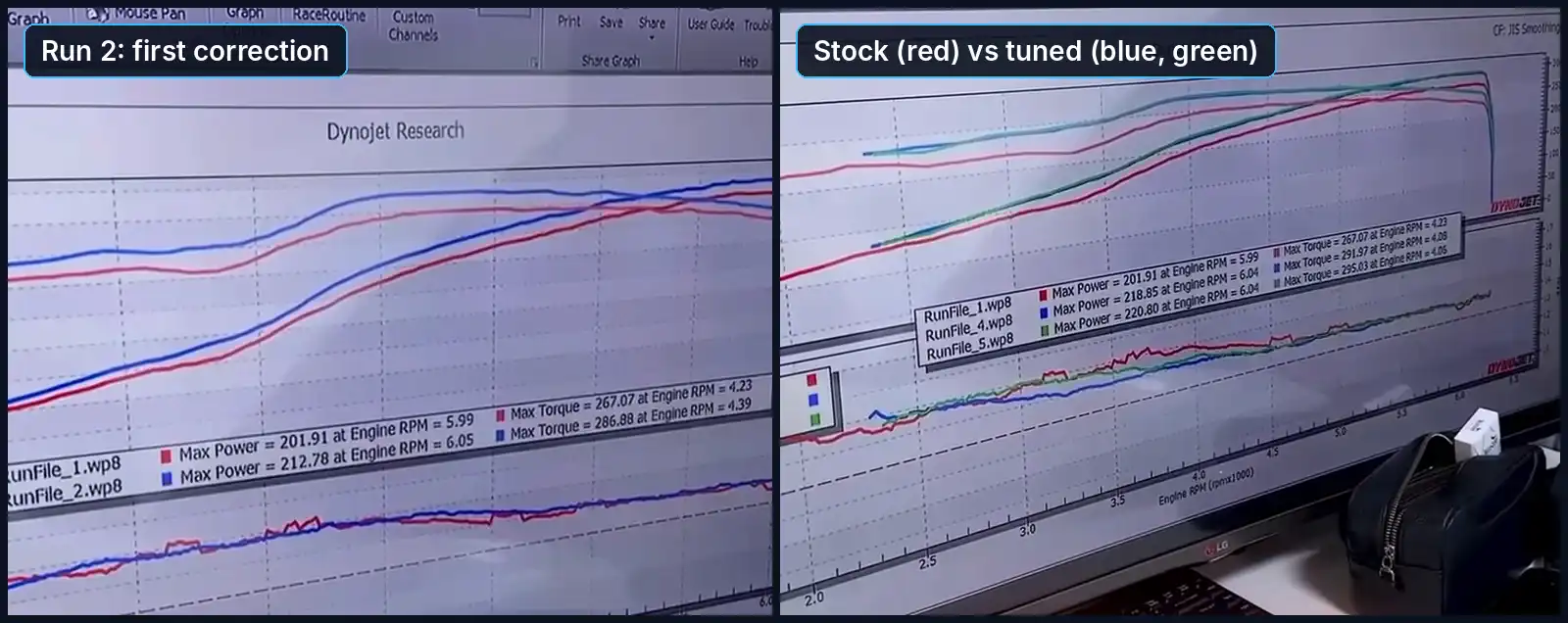
The first corrected file, Run 2, already made 212.78 WHP and 286.88 Nm. After further refinement, Run 4 and Run 5 made the final figures, with Run 5 the best pull: 220.80 WHP at 6,040 rpm and 295.03 Nm at 4,060 rpm. Against the stock run that is +18.89 WHP and +27.96 Nm.
Runs 4 and 5 agree within 1.95 WHP and 3.06 Nm, and peak torque arrives earlier than stock: at 4,230 rpm on Run 1 and at 4,060 rpm on Run 5.
| Run | Peak power | Peak torque | Change vs stock |
|---|---|---|---|
| Run 1 (stock) | 201.91 WHP @ 5,990 rpm | 267.07 Nm @ 4,230 rpm | Baseline |
| Run 2 (first correction) | 212.78 WHP @ 6,050 rpm | 286.88 Nm @ 4,390 rpm | +10.87 WHP, +19.81 Nm |
| Run 4 (final file) | 218.85 WHP @ 6,040 rpm | 291.97 Nm @ 4,080 rpm | +16.94 WHP, +24.90 Nm |
| Run 5 (final file, best pull) | 220.80 WHP @ 6,040 rpm | 295.03 Nm @ 4,060 rpm | +18.89 WHP (+9.4%), +27.96 Nm (+10.5%) |
Values as read from the WinPEP 8 legend. Dynojet chassis dynamometer, JIS correction, figures at the wheels.
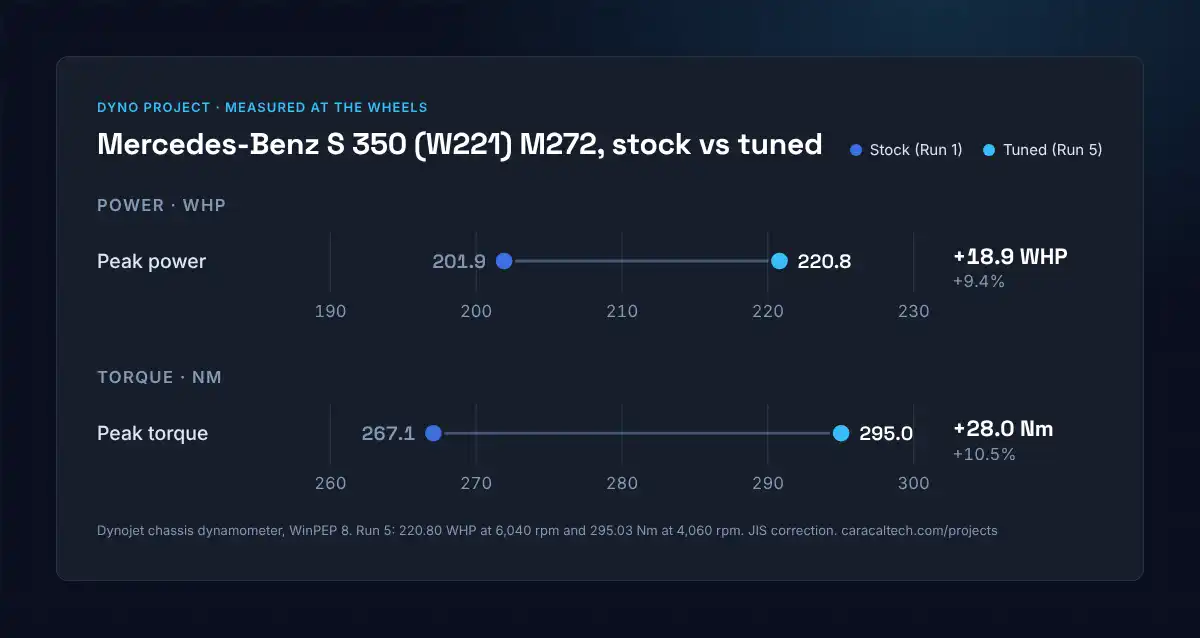
Calibration gain: +18.89 WHP and +27.96 Nm at the wheels, a 9.4% power increase and a 10.5% torque increase, on the same fuel as the stock run.
For a naturally aspirated V6 this is a solid result; a turbo engine gains more because the file can also raise boost. Compare it with our Mazda 3 SkyActiv-G Stage 1 remap, another naturally aspirated engine on the Dynojet, and with the turbo Renault Talisman 1.6 TCe remap.
Part 7: What it means on the road
The torque gain is the part the driver feels. With almost 28 Nm more at the wheels, and peak torque a little earlier, the 7G-Tronic has more to work with when it kicks down for an overtake. For the owner, the more important result is an engine calibrated for the fuel it actually runs, so it can be driven hard without the ECU fighting knock.
The gearbox side of a car like this is handled separately; our overview of gearbox (TCU) tuning tools and software explains how. To see what changes when hardware upgrades come into the plan, read Stage 1 vs Stage 2 vs Stage 3 tuning, with real dyno results for each stage.
Checks for a W221 S 350 (M272)
- Identify the engine first. Badges can be changed. Check the engine, the engine code and the ECU before choosing a file.
- Read the ECU, archive the original. Confirm the Bosch ME9.7 hardware and software number, read the original file and keep it with the car's identification.
- Software version. A file has to be built on the car's own read. Never write a file copied from another vehicle.
- Fuel. The fuel door label calls for RON 95 (minimum 91). Build the calibration for the fuel the car will actually run, and keep knock control fully active.
- Mileage and mechanical health. A remap does not restore a worn engine. On a high-mileage M272, check for stored fault codes, misfires, intake and tumble-flap faults and air leaks before tuning.
- Heat. Intake air temperature rises between pulls. Allow cool-down and compare runs made under the same conditions.
- Logging. Check the file on the road with a datalog; see what an ECU data logger records.
- Legal and warranty. ECU modifications can affect warranty and may not be permitted for road use in every jurisdiction. Check local rules before tuning.
FAQ
Which engine is in the Mercedes-Benz S 350 W221?
The M272 KE35 (M 272.965), a 3,498 cc naturally aspirated 90° V6 with port injection, rated at 200 kW / 272 PS at 6,000 rpm and 350 Nm from 2,400 to 5,000 rpm.
How can you tell an S 350 from an S 500 if the badges have been changed?
Look at the engine and identify it by its code. An S 350 of this generation has the M272 V6, while an S 500 has a V8. Reading the ECU also confirms the engine and software.
Which ECU does the W221 S 350 use?
A Bosch ME9.7 engine ECU, listed by Autotuner with an MPC563 microcontroller.
Which tool can read and write the Mercedes M272 ECU?
We used PCMflash: module 69 lists the M272 (ME9.7) with read, write and checksum correction. Autotuner also lists the Bosch ME9.7 on the Mercedes 350 3.5 V6 for OBD read and write.
Is this the same as an S350 CDI or S350d remap?
No. Those are diesel engines with different ECUs and much larger turbo gains. This car is the petrol S350 with the naturally aspirated M272 V6.
How much did the remap add?
On our Dynojet, peak power went from 201.91 to 220.80 WHP (+18.89 WHP) and peak torque from 267.07 to 295.03 Nm (+27.96 Nm), measured at the wheels.
Why does the dyno show about 202 WHP on a 272 PS car?
The rating is at the crankshaft and the dyno measures at the wheels, after the automatic gearbox and the rest of the driveline. In the CaracalTech team's experience, this car's high mileage also accounts for part of the gap.
Sources
- Mercedes-Benz Classic archive: M 272 E 35 technical data (E 350): 90° V6, light-alloy block, 92.9 × 86.0 mm, 3,498 cc, 10.7, 200 kW at 6,000 rpm, 350 Nm at 2,400 to 5,000 rpm
- Auto-Data: Mercedes-Benz S 350 (W221) 7G-Tronic: engine code M 272.965, multi-port injection, rear-wheel drive
- Auto-Data: Mercedes-Benz S 350 (W221, facelift): 272 PS, 350 Nm, 0 to 100 km/h in 7.3 s, 250 km/h
- Wikipedia: Mercedes-Benz M272 engine: 90° V6, balance shaft, variable-length intake manifold, VVT on both camshafts, tumble flaps
- Mercedes-Benz Canada media: four-valve V6 and V8 engines: intake and exhaust valve timing adjustable over 40 degrees, tumble flaps
- PCMflash module list (PDF): module 69, Mercedes-Benz, M156/M272/M273 (ME9.7) read, write and checksum
- Autotuner: Bosch ME9.7 and MED9.7, OBD read/write: Mercedes 350 3.5 V6 272 hp listed
- Autotuner: Bosch ME9.7 (MPC563)
- Autotuner: Continental and Siemens VGS-NAG2 (7G-Tronic) TCUs, OBD read/write
More petrol dyno projects
- Renault Talisman 1.6 TCe remap and ECU tuning: a turbo petrol on the Dynojet
- Mazda 3 SkyActiv-G Stage 1 ECU remap: a naturally aspirated engine on the same type of dyno
- Nissan Terra 2.0 TGDI Stage 1 ECU remap: a turbo petrol read over OBD
- All CaracalTech dyno projects
Tuning a Mercedes-Benz M272 or M273?
Send the original read from your ECU through File Service, or ask the calibration team about your car on WhatsApp +36 70 604 8339.
Want to build files like this yourself?
Learn ECU remapping with the CaracalTech ECU Remapping Course, or compare the options first in our guide to the best ECU remapping courses.
How this report was put together
- Source material: the workshop video of this job, the WinPEP 8 screens for every run, and the fuel door label photographed on the car.
- Numbers: every power and torque figure is read from the WinPEP 8 legend; gains and percentages are calculated from those values.
- Specifications: engine and vehicle data come from the Mercedes-Benz and reference sources listed above; tool support comes from the tool makers' own lists.
- Not measured: the exact mileage effect. Engine wear is the team's assessment from experience, not a compression or leak-down result.
- Images: the dyno room is darkened and cropped and the number plate is hidden; the car, the dyno and the screen data are not otherwise edited.
Author: CaracalTech Calibration Team
Last Updated: November 2026
Keywords:m272 tune-m272 tuning-mercedes s350 remap-w221 s350 remap-m272 ecu tune-w221 tuning-bosch me9.7 pcmflash-mercedes s350 petrol ecu tuning
Enjoyed the content? Add us as a preferred source to see more of it in Search.